
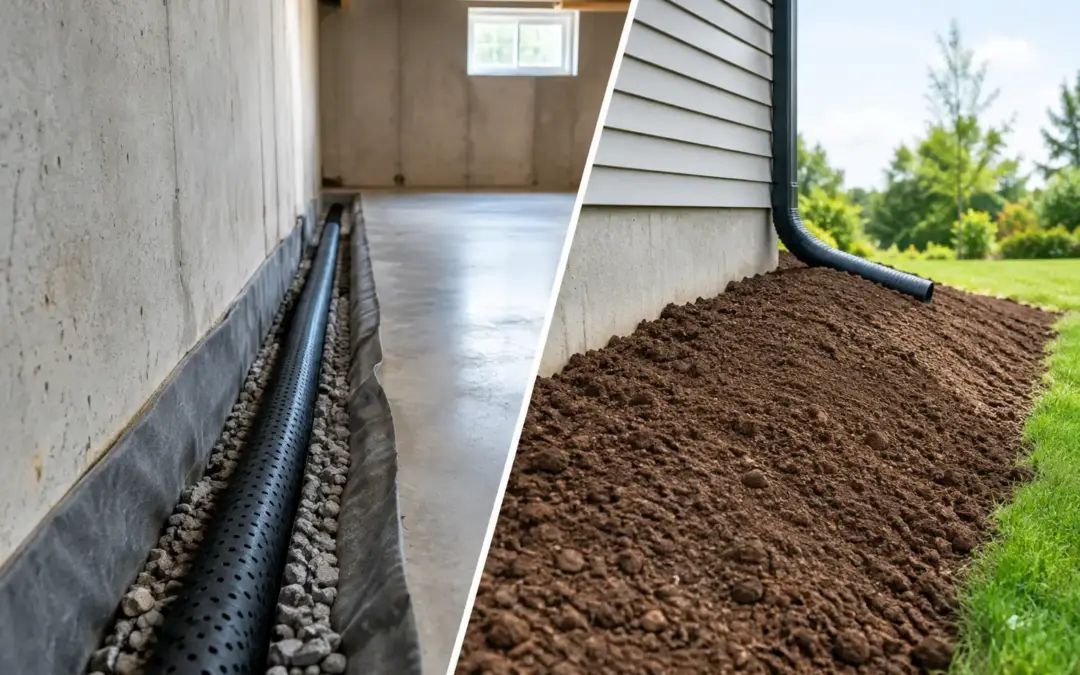
Basement water does not always arrive as a large puddle. Sometimes it starts with a damp wall, a musty smell, or small drops after heavy rain. These signs can point to water moving where it should not. A French drain system in basement waterproofing can help collect and direct water away from the space before it causes bigger problems. When planned and installed correctly, this system can become an important part of a complete basement water control plan.
How Can a French Drain Help Control Basement Water?
Water can move through soil and reach the area around basement footings. When pressure builds, moisture may find small gaps and cracks in the foundation.
A French drain uses a perforated pipe set in a layer of drainage material. The system gives water a planned path to enter the drain instead of allowing it to collect near the foundation.
It Helps Reduce Hydrostatic Pressure
Soil holds water, especially after long periods of rain. That water can create pressure against basement walls and floors.
A properly designed drainage system can help manage this water by collecting it and moving it toward a safe discharge point. Reducing water around the foundation may help lower the pressure that contributes to leaks.
It Can Work With a Sump Pump
Interior drainage and sump pumps often work together. Water collected by the drain can flow toward a sump pit, where a pump removes it from the basement.
This setup gives incoming water a clear route out. However, the system should be designed for the home's layout, soil conditions, and expected water flow. A sump pump alone may not solve every drainage problem if water continues to collect around the foundation.
It Helps Protect the Basement Interior
Continued moisture can affect flooring, drywall, stored belongings, and other finished areas. Over time, damp conditions may also create an environment where mold and mildew can grow.
Water control at the source can help protect the basement from repeated moisture exposure. The goal is not simply to remove water after it enters. It is to give that water a controlled path away from living and storage areas.
It Can Address Recurring Water Problems
Some basement leaks return after every major storm. Wiping up the water or sealing one visible crack may provide only a short-term fix if the main issue is poor drainage.
A French drain in a basement may help when water is entering from below or around the foundation. Before installation, a professional should identify where the water is coming from and determine whether interior drainage, exterior drainage, grading, gutters, or another repair is needed.
What Should You Consider Before Adding One?
Not every basement water problem needs the same solution. Water may enter through wall cracks, floor joints, windows, plumbing, or foundation openings.
Start with a proper inspection. Finding the source helps prevent spending money on a system that does not address the actual problem.
Check the Floor and Foundation Layout
An interior drain normally requires work along parts of the basement floor. The installation plan must account for foundation footings, utilities, existing plumbing, and the location of the sump pit.
A careful layout can help the drainage path work as intended while limiting unnecessary disruption to the basement.
Think About Discharge
Collecting water is only one part of the job. The water must also have somewhere safe to go.
Depending on the property, the drainage system may connect to a sump pump or another approved discharge method. The discharge plan should prevent water from simply flowing back toward the foundation.
Do Not Ignore Exterior Drainage
Interior drainage can be useful, but outside conditions still matter. Clogged gutters, short downspouts, poor grading, or soil that holds too much water can send moisture toward the foundation.
Improving these conditions can reduce the amount of water reaching the basement in the first place. A complete waterproofing plan often looks at both sides of the foundation.
Plan for Long-Term Maintenance
A drainage system should be checked as part of normal basement care. The sump pump, discharge line, and other components should remain clear and ready to work.
It is also smart to watch for new damp spots, unusual odors, or changes after heavy rain. Catching a problem early can make repairs simpler and help protect the basement over time.
A French drain system in basement waterproofing can be a useful step when below-floor water or foundation drainage is part of the problem. It collects water, directs it toward a safe outlet, and can work with a sump pump to keep the basement drier. Still, the right solution depends on the source of the water and the condition of the property. Contact a qualified basement waterproofing professional today for an inspection and a drainage plan built around your home's needs.